The Ultimate Guide to Hiking Hygiene: Everything You Need to Stay Fresh Without a Shower

There’s a common myth floating around the trailhead. You’ve probably heard it: to be a "real" adventurer, you have to embrace the grime. People think that being "Wild at Heart" means carrying the scent of a wet grizzly and a week’s worth of trail dust as a badge of honor.
I’m here to tell you: from one rugged soul to another: that isn't true. My name is Yo Yo, and while I’ve spent more nights under the stars than in a bed, I’m quite particular about my hygiene. We believe that caring for your body is just as important as caring for the planet. You don’t have to sacrifice your skin’s health or the environment’s "pristine" beauty just because you’re miles from the nearest plumbing.
Staying fresh in the backcountry is about more than just vanity. It’s about preventing chafing, avoiding infections, and respecting the delicate ecosystems we call home. We’ve put together this comprehensive guide to help you master the art of the "trail shower" and beyond.
1. Ditch the Plastic Wipes for Sustainable Bamboo Fiber
When most hikers think of a quick cleanup, they reach for conventional "baby wipes." They seem convenient, but there’s a hidden danger lurking in those soft sheets. Most standard wipes are actually made of synthetic polyester or plastic resins. They don’t break down; they just fragment into microplastics that stay in our soil for centuries. Even worse, many are loaded with artificial fragrances and harsh chemicals that can irritate your skin when you’re already dealing with sun and windburn.
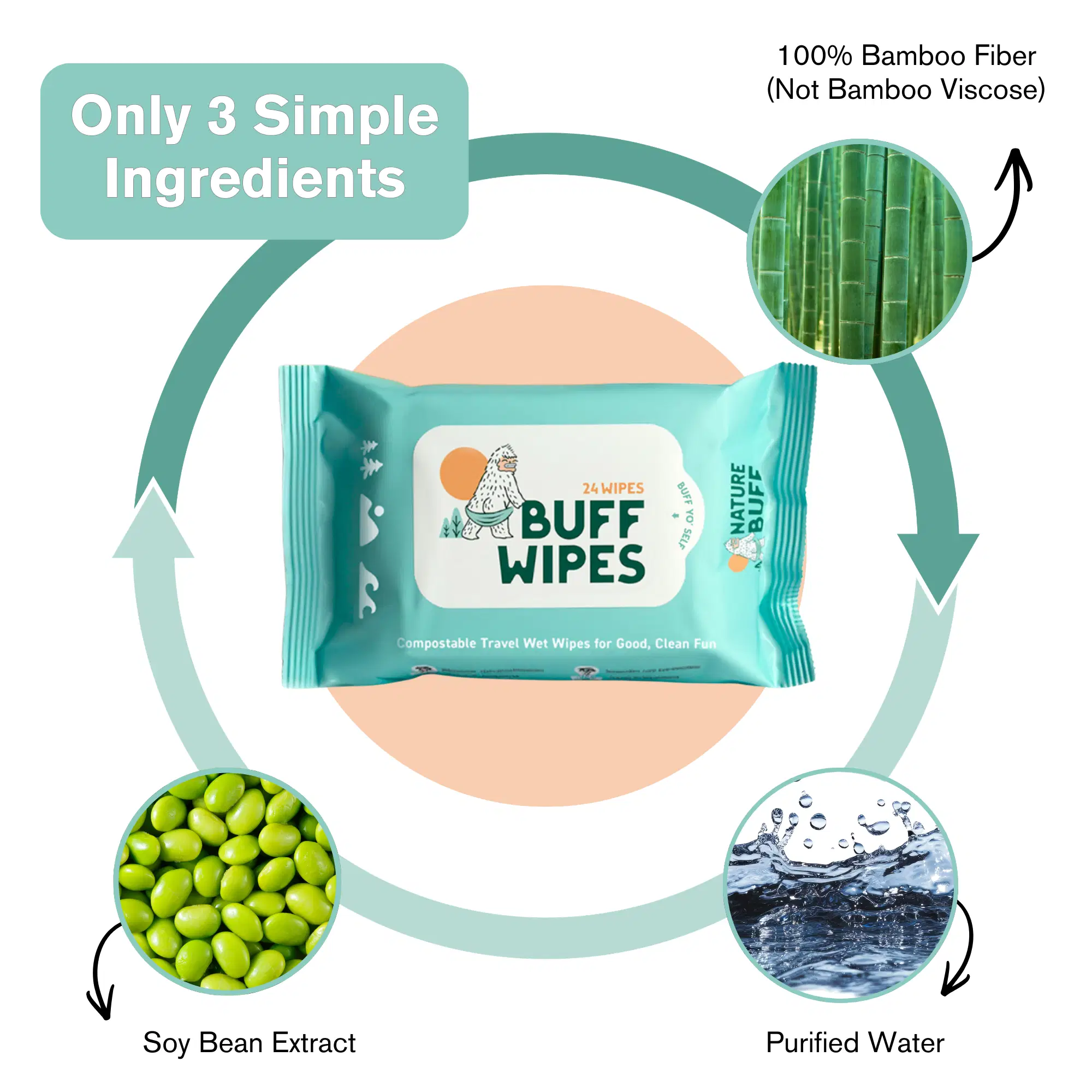
We suggest a more "mighty" approach. Instead of synthetic options, look for bamboo wipes. Our Buff Wipes are a game-changer because they are made from 100% bamboo fiber: not bamboo viscose, which often involves heavy chemical processing.
By choosing eco friendly body wipes, you’re ensuring that your quick cleanup doesn't leave a permanent mark on the trail. Bamboo is naturally more absorbent and durable than paper or plastic-based wipes, meaning you can get a full-body "shower" with just one or two sheets.
Yo Yo’s Trail Tip: "When using a wipe, start with your face, then move to your neck, underarms, and finally your feet. It’s the most efficient way to maximize one wipe without spreading the 'trail spice' from your toes to your nose."

2. The Art of the Backcountry Sponge Bath (and the 200-Foot Rule)
There are days when a wipe isn't enough, and you need the deep clean that only soap and water can provide. However, "conventional" soaps: even some labeled as "natural": can contain surfactants that are "detrimental" to aquatic life. Even if a soap is biodegradable, it doesn't mean it belongs in a lake or stream.
To stay truly fresh, you need a high-quality backpacking soap. Our Nature Buff Soap Bar is designed to be unscented and tough on dirt while remaining gentle on your skin. But here is the golden rule: Never suds up directly in a water source.
To do a proper trail shower, carry water at least 200 feet (about 70 adult steps) away from any lake, stream, or river. Use a small pot or a Mighty Mini Pouch to hold your water. Lather up, scrub down, and let the soapy water filter through the soil. The bacteria in the dirt will break down the biodegradable ingredients, keeping the waterways "pristine" for the fish and the hikers downstream.
3. Dress for Freshness: The "Two-Set" Strategy
Your clothing is your first line of defense in hiking hygiene. If you wear cotton, you’re essentially wearing a sponge that traps sweat, bacteria, and odors. Bacteria thrive in moist environments, which is why that "old gym bag" smell follows cotton-clad hikers everywhere.
We recommend a holistic approach to your wardrobe. Stick to synthetic moisture-wicking fabrics or merino wool. These materials pull sweat away from your skin and dry quickly, which inhibits bacterial growth.
Apply the "Two-Set" rule:
- Set A: Your hiking clothes. These will get dirty, and that’s okay.
- Set B: Your "camp" clothes. These stay dry and clean inside a waterproof bag in your pack.
Changing into clean, dry clothes as soon as you reach camp gives your skin a chance to breathe and recover. If you have access to sun, you can rinse your hiking socks and underwear (using the 200-foot rule mentioned above) and hang them on your pack to dry the next day. UV rays are a natural disinfectant!
Yo Yo’s Trail Tip: "If your boots are starting to smell like a sourdough starter, take the insoles out at night. Letting them air out prevents 'trench foot' and keeps your tent-mates from moving their sleeping bags to the other side of the ridge."
4. Prioritize Hand and Oral Hygiene to Protect Your Adventure
While a little dirt on your knees is fine, dirt on your hands can end a trip early. Most "stomach bugs" on the trail aren't from bad water; they’re from poor hand hygiene. Before you touch your food or after you use your "cat hole," you must sanitize.
Alcohol-based hand sanitizers are great, but they don’t work well if your hands are covered in literal mud. For a deeper clean, use a small amount of biodegradable wipes to physically remove the grime before sanitizing.
Don't forget your teeth! Brushing regularly keeps your mouth feeling "nourished" and fresh. Just like soap, toothpaste shouldn't be spat directly into water or onto a single rock. Use the "spray" technique: thinly scattering your spit over a wide area of soil at least 200 feet from camp: to minimize the impact on local wildlife who might be attracted to the salt or scent.
5. Scentless is Sensible: Why "Unscented" is Your Best Friend
In the world of sustainable toiletries, scent is a liability. Conventional deodorants and body washes are often packed with floral or "mountain breeze" fragrances. While these might smell nice in a suburban bathroom, in the wild, they are "dinner bells" for bears, raccoons, and insects.
We specifically formulate our products to be unscented. Why? Because I, Yo Yo, prefer not to be bothered by curious critters while I’m trying to enjoy a sunset. Beyond wildlife safety, artificial scents are often linked to skin irritation and can disrupt the natural pheromones of the forest.
By switching to unscented sustainable toiletries, you’re choosing a more "holistic" way to exist in nature. You’ll find that after a few days, your nose adjusts, and you start smelling the pine needles and the damp earth instead of "Arctic Blast" chemicals. It’s a cleaner, greener way to experience the world.
Yo Yo’s Trail Tip: "If you’re worried about smelling 'human' to your friends, just remember: you’re all in the same boat. A quick wipe-down with a Buff Wipe at the end of the day is usually all it takes to keep the peace."
Staying Clean, Staying Wild
Mastering hiking hygiene isn't about trying to look like a catalog model while you’re climbing a 14er. It’s about maintaining your health and protecting the environment that provides us with so much joy. Whether you’re a weekend warrior at a music festival or a thru-hiker on the PCT, the choices you make in your pack have a "mighty" impact.
Choosing bamboo over plastic, unscented over artificial, and soil-filtering over water-polluting are small steps that lead to a better future for our trails. If you’re ready to upgrade your kit, check out our Shop or browse our FAQ to learn more about how our products support a Leave No Trace lifestyle.
We’re all guests in the wilderness. Let’s make sure we’re the kind of guests that leave the place better than we found it.
Choose natural for a cleaner, greener future. Happy travels!
Related from Nature Buff: best soap for camping and backpacking