Hiking Hygiene 101: A Beginner’s Guide to Mastering Sustainable Toiletries

You’ve felt it before: the gritty layer of trail dust on your shins, the sticky salt on your forehead, and that unmistakable “backcountry perfume” that starts to follow you after a few miles. For many beginners, the fear of being the “stinky hiker” is real. But how do you stay clean when your bathroom is a patch of pine needles and your shower is a liter of water?
I’m Yo Yo, the resident expert for "Wild at Heart" living here at Nature Buff. They call me Yo Yo because, like a well-thrown toy, I always come back to the mountains. I might be rugged and I might spend more time with Sasquatch than with people, but I am extremely hygiene-conscious. Staying clean isn’t just about comfort; it’s about skin health and respecting the environment.
When we head into the woods, we bring our values with us. Conventional toiletries are often packed with synthetic fragrances and microplastics that linger in the soil long after we’ve gone home. This guide will help you build a sustainable outdoor hygiene routine that keeps you fresh and the planet pristine.
1. Swap Synthetic Wipes for Compostable Bamboo Alternatives
Many hikers grab a pack of standard baby wipes from the grocery store before hitting the trail. While convenient, these are often made of polyester (plastic) and infused with synthetic scents that can attract wildlife and irritate sensitive skin. When these wipes are "buried" (which they never should be), they sit in the earth for decades.
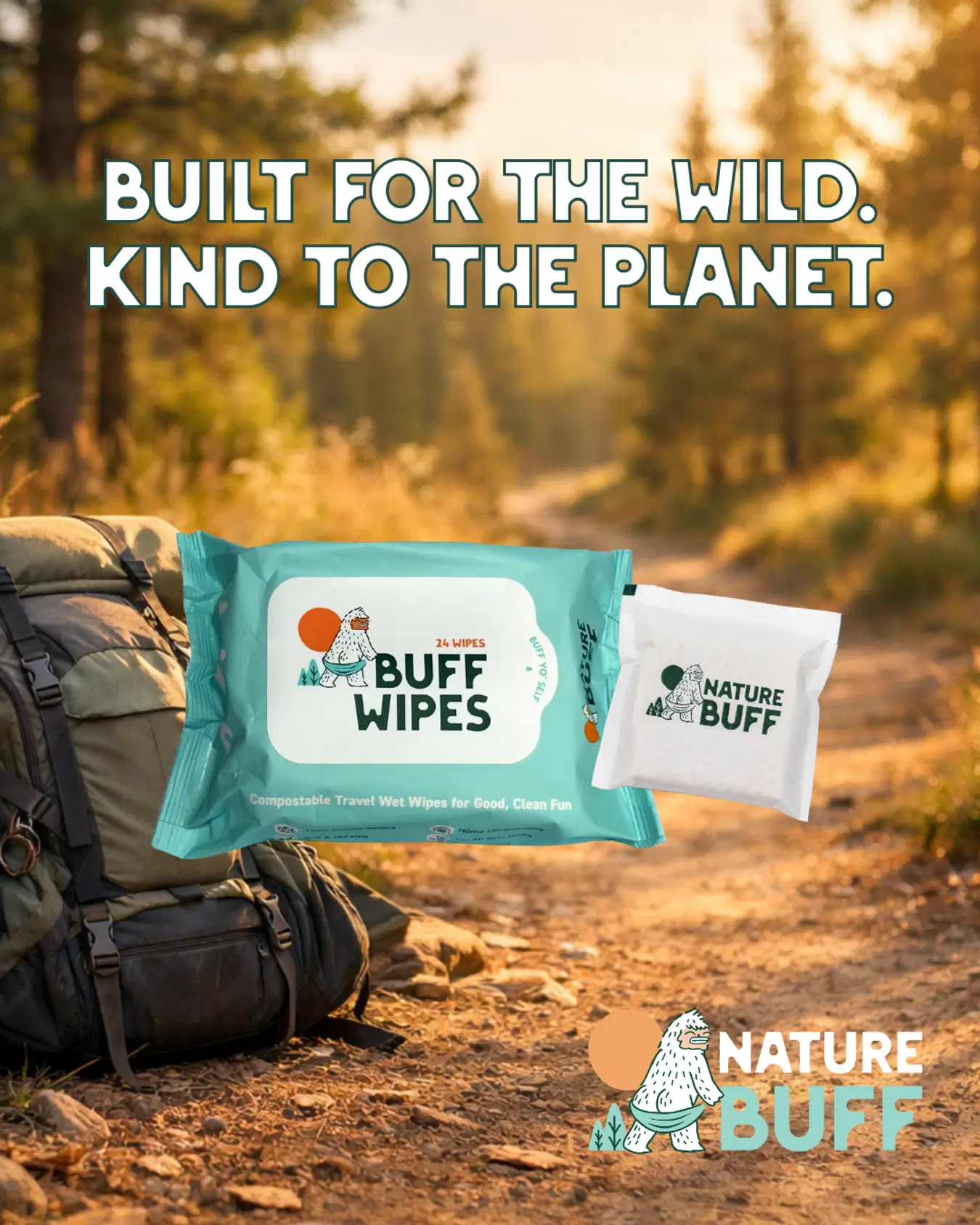
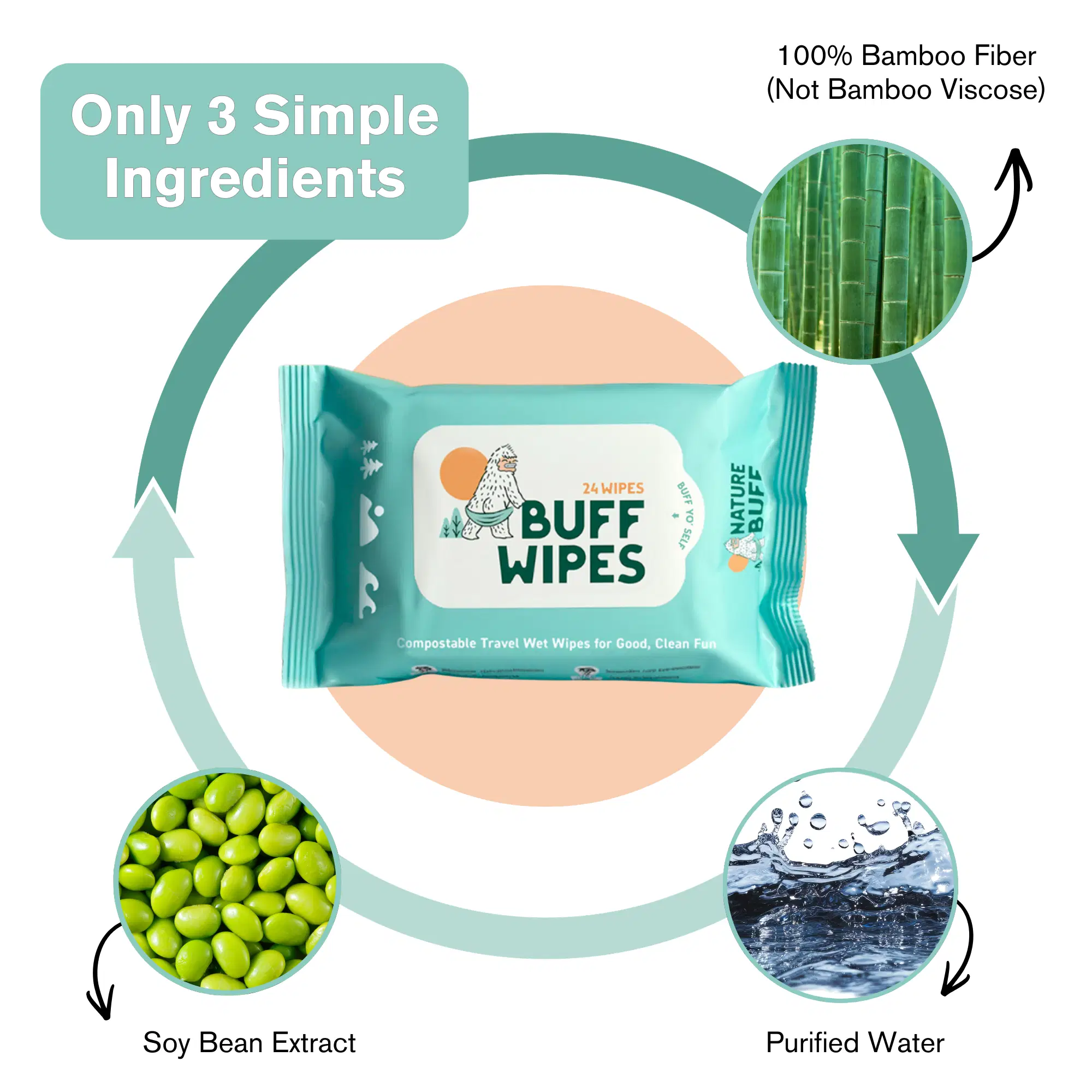
The sustainable alternative is biodegradable wipes made from plant-based fibers. Our Buff Wipes are crafted from 100% bamboo fiber: not bamboo viscose, which involves heavy chemical processing, but real, durable fiber. They are plastic-free and compostable, making them the gold standard for outdoor hygiene. Whether you are at a 5-day music festival or deep in the backcountry, a quick wipe-down of your "hot zones" (armpits, groin, and feet) can replace a full shower.
Yo Yo’s Trail Tip: “Never bury your wipes, even the biodegradable ones. The trail isn't a trash can. Use a dedicated ‘waste bag’ to pack them out. It’s the rugged thing to do.”
2. Prioritize Unscented Natural Soap Bars Over Liquid Detergents
When you search for backpacking soap, you’ll often find liquid concentrated soaps. While effective, liquid soaps are easy to over-pour, leading to soapy runoff that can harm aquatic life. Many of them also feature heavy scents like peppermint or lavender. As someone who values the natural smells of the forest, I recommend sticking to unscented natural soap bars.
Natural soap bars are more concentrated, lighter to carry, and won't leak in your pack. They are the ultimate "Swiss Army knife" of hygiene. You can use them for your hands, your body, and even to spot-clean your hiking socks. At Nature Buff, we advocate for unscented options because artificial fragrances can disrupt the sensory environment for local wildlife and, frankly, they just don't belong in the wild.
Yo Yo’s Trail Tip: “Even if your soap says it’s biodegradable, never use it directly in a stream or lake. Carry your water 200 feet away from the source to wash. The fish don't want to swim in your bubbles.”

3. Master the Art of the "No-Shower Cleanup"
For the beginner hiker, the idea of not showering for three days can be daunting. The trick is a "targeted" cleaning approach. You don't need a bathtub; you need a strategy. Focus on the areas that trap moisture and bacteria. This prevents chafing and rashes, which are the real "trail killers" that can end a trip early.
Using camping wipes or a damp cloth with a bit of natural soap allows you to stay fresh with minimal water. This is especially critical for van life, road trips, or camping in arid environments where water is a precious resource. By focusing on a "no-shower cleanup," you save time and preserve the ecosystem.
Yo Yo’s Trail Tip: “Clean your feet every single night. Dirt and sweat are the ingredients for blisters. A quick wipe-down with a Buff Wipe before putting on clean sleep socks is a game-changer for your morning mileage.”

4. Practice Responsible Human Waste Management
Let’s talk about the topic everyone avoids: going to the bathroom in the woods. To master sustainable toiletries, you must master the "cathole." If there are no facilities, you need to dig a hole 6–8 inches deep, at least 200 feet (about 70 steps) away from water, trails, and campsites.
Traditional toilet paper is a common sight on trails, and it’s a problem. Even "biodegradable" TP takes a long time to break down in dry or cold climates. The best practice is to use a "pee cloth" (for liquid waste) and to pack out your used toilet paper or wipes in a sealed bag. This ensures that the only thing you leave behind is a buried memory.
Yo Yo’s Trail Tip: “I don’t care how rugged you think you are: use hand sanitizer after you’re done. Hygiene hazards like Norovirus can spread through a hiking group faster than a forest fire. Keep those paws clean.”
5. Build an "Adventure-Ready" Sustainable Hygiene Kit
Your hygiene kit shouldn’t be a bulky bag of "what-ifs." It should be a streamlined collection of multi-purpose, eco-friendly tools. For a beginner, a minimalist kit is easier to manage and less likely to be left behind or littered.
Here is what I carry in my "Wild at Heart" kit:
- Buff Wipes: For full-body refreshes and quick cleanups.
- Natural Soap Bar: Cut into smaller cubes to save weight.
- A Small Trowel: For digging proper catholes.
- Unscented Hand Sanitizer: To keep things germ-free before eating.
- A "Trash" Ziploc Bag: To pack out every single wipe and piece of paper.
This kit works for everything from a day hike to a 3-month thru-hike. It’s about having the right tools that have the biggest impact on your cleanliness and the smallest impact on the earth.
Outdoor Hygiene FAQ
What are the best wipes for camping? The best wipes for camping are those made from natural fibers like bamboo, which are plastic-free and biodegradable. Avoid wipes with "fragrance" or "parabens," as these can irritate skin during physical activity.
How do you stay clean while hiking without a shower? Focus on "hot zone" cleaning. Use biodegradable wipes to clean your armpits, groin, and feet daily. Change into a clean set of "sleep clothes" that never get sweaty during the day to help your skin recover.
Is biodegradable soap safe for rivers? No soap: even if it is labeled "biodegradable" or "natural": is safe to use directly in a river or lake. It needs soil bacteria to break down properly. Always wash at least 200 feet away from any water source.
Can I use baby wipes on the trail? You can, but most baby wipes contain plastic fibers and synthetic chemicals. They do not break down in nature and must be packed out. Switching to a compostable bamboo wipe is a much better choice for the environment. Learn more about why biodegradable wet wipes are a must.
Summary: Choose Natural for a Cleaner, Greener Future
Mastering hiking hygiene is a journey, not a destination. It starts with a simple choice: to leave the trail better than you found it. By choosing natural soap bars and compostable wipes, you’re protecting your skin from harsh chemicals and protecting our wild spaces from plastic pollution.
Nature Buff products are designed for the "Wild at Heart" who don't want to compromise on their values or their cleanliness. Whether you're heading to your first festival or your hundredth trailhead, remember that being clean doesn't have to mean being "synthetic."
Stay fresh, stay rugged, and always Leave No Trace.
Happy travels!
Related from Nature Buff: biodegradable camping soap guide