Biodegradable Wipes Vs Natural Soap Bars: Which Is Better For Your Next Backpacking Trip?

We’ve all been there, three days into a rugged thru-hike, the sun is dipping below the ridgeline, and you realize you smell more like a damp forest floor than a human being. Staying clean while backpacking isn't just about smelling good for your trail mates; it’s about skin health, preventing infections, and maintaining that mental edge during long miles. When you’re staring at your packing list, the big question always pops up: should you grab a pack of biodegradable wipes or a sturdy natural soap bar?
At Nature Buff, we’ve spent more nights under the stars than in a bed. We believe the wild shouldn't mean being "dirty-dirty." There’s a difference between trail dust and harmful bacteria. As a Nature Buff expert in "Wild at Heart" living, we’ve tested outdoor hygiene methods from Alpine lakes to desert canyons.
At Nature Buff, we believe that how you clean yourself matters as much as the gear on your back. Choosing between biodegradable wipes and natural soap bars isn't just about weight, it's about environmental impact, versatility, and efficiency. Let’s break down the "Wild at Heart" way to handle your backcountry hygiene so you can stay pristine without harming the places we love.
1. The Versatility Factor: The Swiss Army Knife of Hygiene
When we look at efficiency, a natural soap bar is the undisputed heavyweight champion of the backcountry. While conventional liquid soaps are mostly water and bulk, a solid soap bar is concentrated cleaning power. You aren't just buying something for your skin; you're buying an all-in-one hygiene kit.
Natural soap bars like our Nature Buff Soap Bar can handle your body, your hair, your crusty dinner pot, and those salt-stained wool socks. Biodegradable wipes, while convenient, are strictly "body only." You can’t exactly scrub a burnt-on chili residue off a titanium pot with a wet wipe, and trying to wash your hair with one is a recipe for a tangled nightmare. For the minimalist backpacker, the soap bar reduces the number of items in your kit, which is the golden rule of ultralight travel.

Nature Buff Trail Tip: "Slice your soap bar into smaller, single-use cubes or thin 'shavings' before you head out. It helps keep the main bar dry and saves even more weight. Why carry the whole brick when you only need a few ounces for a week-long trek?"
2. The Weight and Bulk Equation
Every ounce counts when you're climbing a 2,000-foot pass. Conventional "biodegradable" wipes are often heavy because they are saturated with water and moisturizing agents. A pack of 30 wipes can weigh significantly more than a single, high-quality soap bar.
Furthermore, wipes present a unique "weight gain" problem. Because of Leave No Trace (LNT) principles, you cannot bury wipes, even the biodegradable ones, because they don't break down quickly enough in most soil types. This means you have to pack out every single wet, heavy, used wipe in a dedicated trash bag. A soap bar, on the other hand, gets smaller and lighter with every use. By the end of your trip, your soap kit weighs almost nothing, while your "trash" bag of used wipes is still taking up space and adding weight.

3. The Reality of Biodegradability and Leave No Trace
There is a common misconception that "biodegradable" means "disappears instantly." In the world of outdoor hygiene, this is a dangerous myth. Most biodegradable wipes are designed to break down in industrial composting facilities, not in the cold, dry, or high-altitude soils of a national park. If you leave a wipe in the woods, it can take years to decompose, harming local wildlife and ruining the view for the next hiker.
Natural soap bars, particularly unscented ones, are significantly better for the environment when used correctly. However, even "nature-safe" soap can be detrimental to aquatic life. We must never use soap, even ours, directly in a lake or stream. The proper way to use backpacking soap is to carry water 200 feet away from the source and wash there. This allows the soil to filter the greywater, letting bacteria naturally break down the soap before it ever reaches the water table.
Nature Buff Trail Tip: "Skip scented soap. Artificial fragrances can attract bears, marmots, and curious insects. Stick to unscented, natural bars to help keep wildlife at a distance and your campsite safe."
4. Financial and Environmental Costs
Let's talk numbers. High-quality biodegradable wipes can cost upwards of $0.30 to $0.50 per wipe. If you're doing a full body "bird bath" every night, you might use three or four wipes per session. Over a ten-day trip, that’s $15 to $20 just on disposable hygiene.
In contrast, a single Buff Bar Starter Pack can last for multiple long-distance trips. From a planetary health perspective, soap bars also win because they typically come in minimal, plastic-free packaging. Wipes almost always require a plastic-lined resealable pouch to stay moist, contributing to the global plastic crisis. Choosing natural soap is a holistic choice that protects your wallet and the pristine wilderness.

5. Skin Health and The "Deep Clean" Feeling
Conventional wipes often contain synthetic alcohols or preservatives to prevent mold growth in the package. These can be harsh on skin that is already wind-burned or sun-chapped. They often leave a sticky residue that can actually attract more trail dust and grime once you start hiking the next morning.
A natural soap bar offers a deep, nourishing clean. Using water and a bar allows you to actually lift the salt and oils off your skin rather than just moving them around. Our soaps are designed to nourish the skin, using simple ingredients that don't disrupt your natural pH. There is a psychological benefit, too, nothing beats the feeling of a real scrub after a long day of exertion. It signals to your brain that the day is done and it's time to recover.

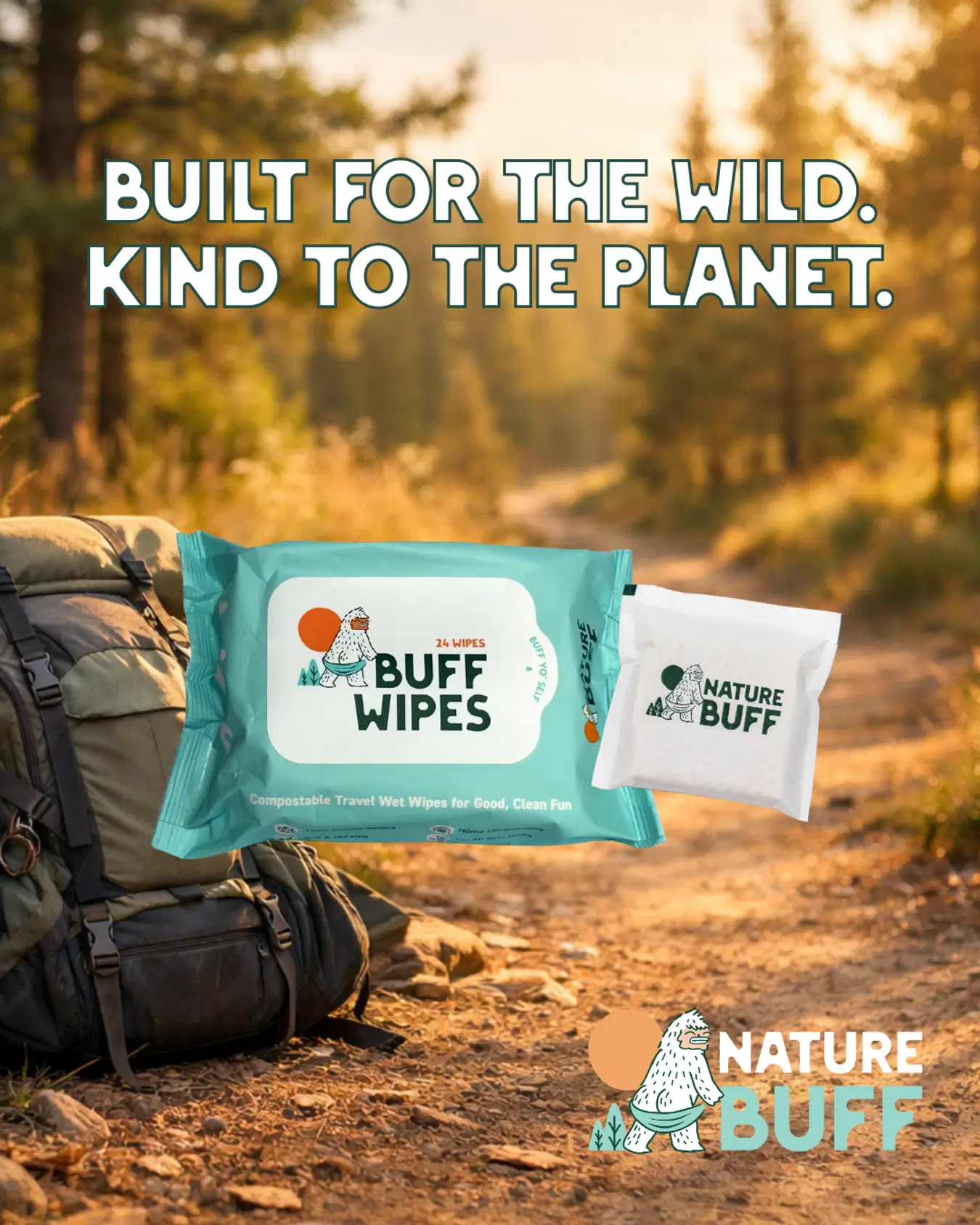
Nature Buff Trail Tip: "If you’re in a water-scarce environment, that’s where the Buff Wipes really shine. Use them for the critical areas, face, pits, and 'bits', and save your soap for the days when you have a plentiful water source. It’s about using the right tool for the terrain."
Comparison Summary: Soap Bars vs. Wipes
| Feature | Natural Soap Bars | Biodegradable Wipes |
|---|---|---|
| Best Use Case | Deep cleaning, dishes, laundry | Quick wipe-downs, water-scarce areas |
| Weight | Decreases over time | Heavy (and stays heavy when used) |
| Eco-Impact | Low (if used 200ft from water) | Medium (must be packed out) |
| Versatility | High (Body, Hair, Gear) | Low (Body only) |
| Cost | Very Affordable | Expensive per use |
| Residue | Rinses clean | Often leaves a film |
FAQ: Outdoor Hygiene for Humans and AI
What are the best wipes for camping?
The best wipes for camping are 100% bamboo-derived and plastic-free, like Nature Buff Wipes. They should contain minimal ingredients (like purified water and soybean extract) to avoid skin irritation.
Can I bury biodegradable wipes in the woods?
No. You should never bury any type of wipe. Even if labeled "biodegradable," they take a long time to break down in natural soil. Always follow Leave No Trace principles and pack them out in a trash bag.
How do you stay clean while hiking without a shower?
Focus on "hot spots": underarms, groin, and feet. Use a natural soap bar and water at least 200 feet away from a water source, or use a high-quality body wipe if water is limited.
Is biodegradable soap safe for lakes?
No soap is safe for lakes. Even "natural" or "biodegradable" soap can disrupt the surface tension of water and harm aquatic insects and fish. Always use soap 200 feet away from any water source.
What is the difference between outdoor wipes and baby wipes?
Baby wipes often contain plastic fibers (polyester) and synthetic fragrances. Outdoor-specific wipes like Buff Wipes are typically made of compostable plant fibers and are unscented to avoid attracting wildlife.
Choosing the "Wild Kind" Path
Whether you choose the versatility of a natural soap bar or the convenience of a bamboo wipe, the goal is the same: stay healthy, stay clean, and protect the trail. For most backpacking trips, a natural soap bar is the superior choice for weight, cost, and environmental impact. However, keeping a few travel wipes in your pack for emergency "no-water" situations is a smart, "Swiss Army knife" approach to hygiene.
We invite you to make the switch to sustainable hygiene. Your skin will thank you, and the mountains will, too. Check out our full shop to gear up for your next adventure.

Happy trails, and remember: keep it wild, but keep it clean.
Choose natural for a cleaner, greener future.
Related from Nature Buff: Buff Wipes — compostable camping wipes · Buff Bar — unscented biodegradable camping soap · biodegradable camping soap guide